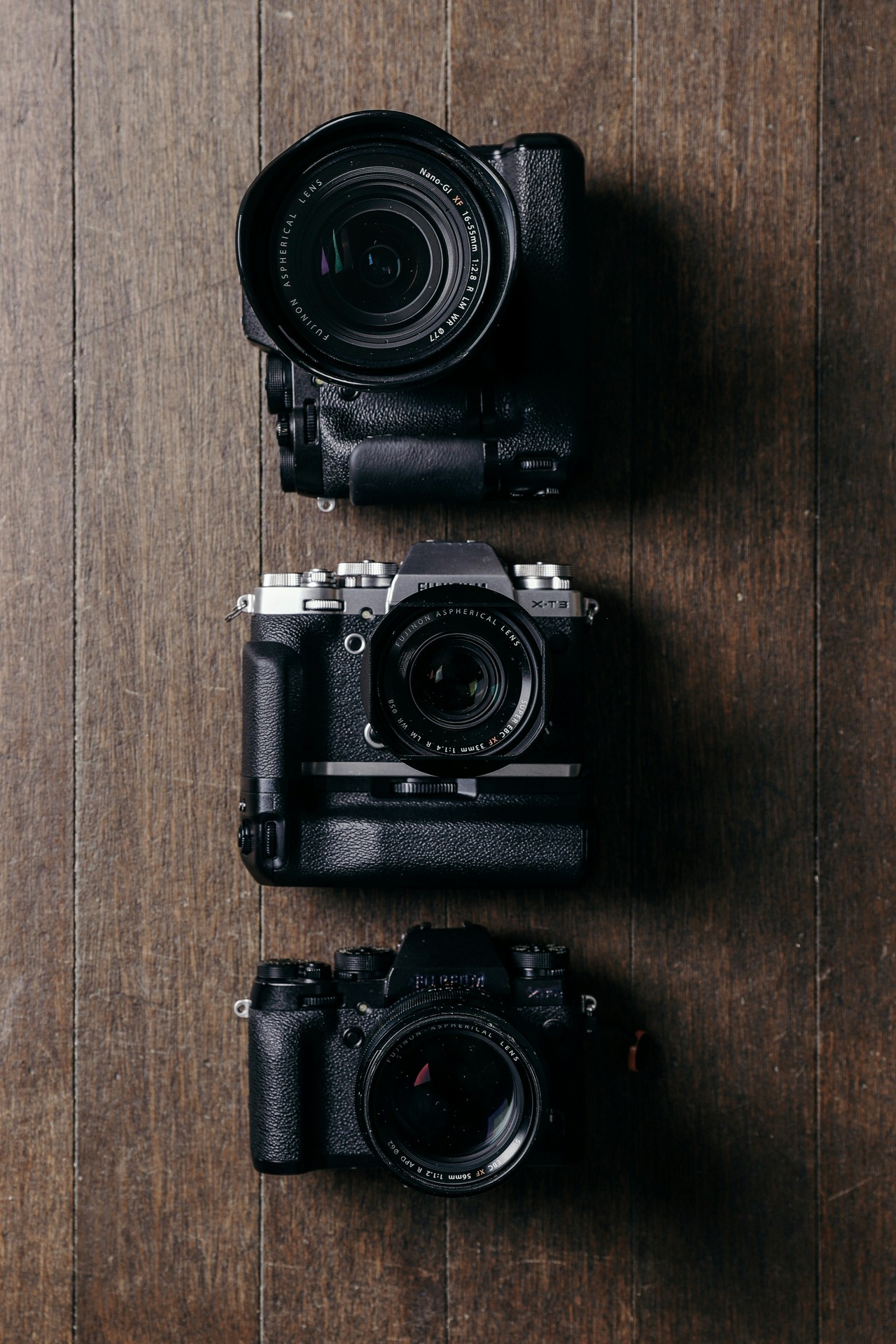



- Sony E mount: the largest, most diverse ecosystem thanks to openness to third-party manufacturers (Sigma, Tamron).
- Canon RF mount: maximum optical boldness with exceptional apertures (f/1.2 and f/2) and a configurable control ring.
- Nikon Z mount: the shortest flange distance on the market, offering remarkable consistency from centre to edges.
- Focus Breathing: new lenses incorporate magnetic linear motors that eliminate any change in focal length during focusing.
Choosing a mount in 2026: Beyond the camera body
When investing in professional imaging equipment, the body is merely a component replaceable every 3 to 4 years: your lenses are your true artistic and financial assets. In 2026, the battle between the three full-frame mirrorless giants, Sony E, Canon RF and Nikon Z, has never been more exciting.
Each of the three manufacturers has made radical engineering choices that directly influence your shooting comfort, budget and the final aesthetic of your photo stories.
Sony E mount: Full maturity and the third-party advantage
With over ten years of development of the full-frame E mount, Sony has the most extensive catalogue on the market. The G Master second-generation range (GM II) has achieved the feat of halving weight and size while improving sharpness and autofocus speed.
But Sony's trump card remains its open mount. Renowned lens makers such as Sigma (with its legendary Art series) and Tamron offer professional-level alternatives at prices 30% to 40% lower, making the ecosystem particularly accessible and adaptable for independent studios.
Canon RF mount: Optical boldness and breathtaking apertures
Canon designed its RF mount with a generous 54 mm diameter and a 20 mm flange distance, enabling its engineers to design lenses previously impossible for DSLRs:
- The RF 28-70mm f/2L USM : the world's fastest standard zoom, single-handedly replacing a whole array of prime lenses for reportage.
- The prime lenses 50mm f/1.2L and 85mm f/1.2L DS : unrivalled creamy bokeh with surgical sharpness even wide open.
- The systematic inclusion of a customisable control ring allowing aperture, ISO or exposure compensation adjustments at your fingertips.
Nikon Z mount: Perfect geometry and the shortest flange distance
Nikon has the mount with the largest diameter (55 mm) and shortest flange distance (16 mm). This choice allows light rays to reach the sensor's extreme corners at an optimal angle of incidence, guaranteeing uniform sharpness from the centre to the outermost image edges, without chromatic distortion.
Conclusion: Which mount should you prioritise for your needs?
If you are looking for budget flexibility and the widest choice of lightweight lenses, Sony E remains the undisputed leader. If you prioritise a distinctive rendering and exceptional apertures, Canon RF offers a prestigious visual signature. Finally, if absolute optical precision and consistency are your top priorities, Nikon Z is an outstanding choice.